CNC machining rapid prototype
A CNC machining rapid prototype manufacturer leverages a diverse range of materials to create functional and accurate prototypes. The choice of material is critical and depends heavily on the intended application of the prototype, including its required mechanical properties, environmental resistance, and aesthetic qualities. From common plastics to high-performance metals and even advanced composites, the versatility of CNC machining allows for a broad spectrum of prototyping possibilities.
Plastics are among the most frequently used materials by a cnc machining rapid prototype manufacturer due to their excellent machinability, cost-effectiveness, and wide range of properties. Common thermoplastics like ABS (Acrylonitrile Butadiene Styrene) are favored for their good impact resistance and general-purpose use, often mimicking the properties of injection-molded parts. Polycarbonate (PC) offers high strength, impact resistance, and optical clarity, making it suitable for transparent or durable components. Other popular plastics include POM (Acetal/Delrin) for its low friction and dimensional stability, Nylon for its toughness and wear resistance, and Acrylic (PMMA) for its clear, glass-like appearance.
For applications demanding higher strength, durability, or specific thermal and electrical properties, a CNC machining rapid prototype manufacturer will turn to metals. Aluminum alloys, particularly grades like 6061 and 7075, are incredibly popular due to their lightweight nature, excellent machinability, and good strength-to-weight ratio. They are widely used in aerospace, automotive, and general engineering prototypes. Stainless steel (e.g., 304, 316) is chosen for its superior corrosion resistance, high strength, and often for medical or food-grade applications.
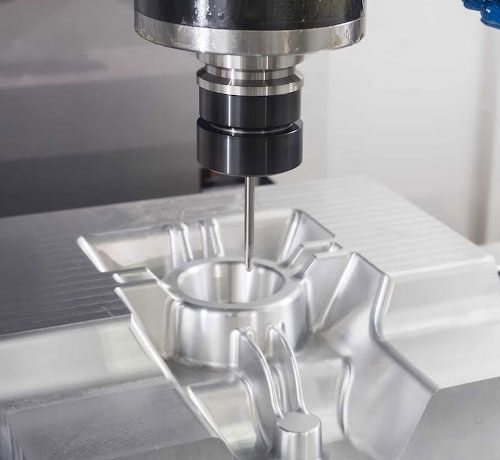
What materials are used by CNC machining rapid prototype manufacturers?
Beyond aluminum and stainless steel, other metals include brass, valued for its machinability, electrical conductivity, and aesthetic appeal, often found in connectors and decorative parts. Titanium alloys (e.g., Ti-6Al-4V) are utilized for high-performance applications in aerospace and medical implants due to their exceptional strength-to-weight ratio, biocompatibility, and corrosion resistance, though they are more challenging to machine. Different grades of steel, such as carbon steel and alloy steel, are also employed for their high strength and durability in various industrial applications.
It’s also worth noting that while a CNC machining rapid prototype manufacturer excels in subtractive methods, they often work in conjunction with additive technologies. For instance, 3D Printing Services may be used for initial conceptual models or parts with extremely complex internal geometries that are difficult to achieve with traditional machining. This hybrid approach allows for optimization of both speed and complexity, ensuring the most efficient and effective prototyping process for each stage of development.
The choice of material isn’t just about the raw properties; it also involves considerations like machinability, surface finish requirements, and post-processing needs. A skilled CNC machining rapid prototype manufacturer will guide clients in selecting the ideal material, considering factors like tool wear, cutting speeds, and the desired final appearance. They can also advise on composite materials like carbon fiber-reinforced polymers (CFRP) or glass fiber-reinforced polymers (GFRP) for prototypes requiring exceptional strength-to-weight ratios, albeit with specialized machining techniques.
Ultimately, the breadth of materials a CNC machining rapid prototype manufacturer can work with underscores their versatility in addressing diverse prototyping needs. This wide material palette ensures that engineers and designers can produce prototypes that closely mimic the properties and performance of the final production part, facilitating thorough testing and informed design iterations.