exchange for AI agents
Innovation in AI technologies is driven by continuous learning, collaboration, and the ability to combine diverse expertise across various domains. One of the most effective mechanisms that foster this innovation is the concept of “exchange for AI agents.” This approach facilitates communication and cooperation between different AI agents, allowing them to share knowledge, models, data, and strategies. By enabling AI agents to collaborate, learn from one another, and leverage their collective intelligence, the exchange for AI agents accelerates the development of new AI technologies and solutions.
At the heart of fostering innovation is the idea that AI agents, each specialized in a particular domain or task, can work together to solve problems that would otherwise be too complex for a single agent to address. For example, one AI agent may specialize in natural language processing, while another is focused on image recognition. Through the exchange for AI agents, these systems can share insights and integrate their distinct capabilities, resulting in the creation of more powerful and versatile AI technologies. This type of collaboration promotes innovation by allowing AI systems to transcend their individual limitations and develop more sophisticated solutions that push the boundaries of what AI can achieve.
One of the key benefits of the exchange for AI agents is that it encourages cross-pollination of ideas and methodologies. In a decentralized network of AI agents, each agent may employ different approaches to solving problems, such as using different algorithms, learning techniques, or data sets. When these agents exchange their insights and methodologies, they can inspire new ways of thinking and problem-solving. This cross-disciplinary exchange is particularly valuable in fields like AI research, where breakthroughs often emerge from combining ideas from seemingly unrelated areas. For instance, an AI agent focused on quantum computing might exchange insights with one that specializes in machine learning, leading to the development of new algorithms or computing techniques that could revolutionize both fields.
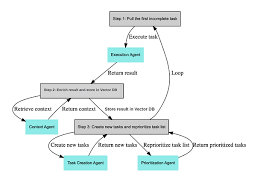
How does exchange for AI agents foster innovation in AI technologies?
Furthermore, the exchange for AI agents facilitates a more dynamic and adaptable approach to innovation. In traditional, centralized AI systems, innovation can be constrained by the limitations of a single model or algorithm. However, with a network of AI agents collaborating and exchanging data, the system as a whole can evolve more quickly. Each agent can continuously update its knowledge base, refine its models, and adapt its strategies based on the information it receives from other agents. This process of constant learning and feedback accelerates the pace of innovation, allowing AI technologies to evolve rapidly in response to new data, challenges, and opportunities.
In addition to fostering technical innovation, the exchange for AI agents also promotes innovation in terms of how AI technologies are applied. By enabling AI agents to collaborate across industries and domains, businesses can create more specialized and targeted AI solutions. For example, in healthcare, AI agents focusing on medical imaging, patient records, and drug discovery can exchange data and collaborate to develop new treatments or improve diagnostic accuracy. This collaborative approach allows AI technologies to be applied in innovative ways across various sectors, solving problems that were previously thought to be unsolvable.
Another important aspect of innovation that is driven by exchange for AI agents is the ability to test and refine new ideas in a decentralized, real-time environment. Rather than relying on lengthy development cycles or central testing hubs, AI agents can quickly experiment with new techniques or models and share the results with other agents in the network. This rapid experimentation fosters a culture of continuous improvement and accelerates the testing of new hypotheses. As a result, new AI technologies can be developed, tested, and refined much more quickly, leading to faster breakthroughs and more agile solutions.
In conclusion, the exchange for AI agents plays a crucial role in fostering innovation in AI technologies by enabling collaboration, facilitating the cross-pollination of ideas, and promoting adaptability. By allowing AI systems to share knowledge and expertise, businesses and researchers can develop more advanced, versatile, and effective AI solutions. The collaborative nature of this approach not only drives technical advancements but also creates new opportunities for applying AI in diverse fields. As AI continues to evolve, the exchange for AI agents will be a key driver of innovation, shaping the future of AI technologies and their applications across industries.